Why photograph your family on film (and what Super 8 actually is)
35mm, 120 medium format and Super 8, explained simply. What film looks like, why it takes longer, and why so many families are choosing it again.
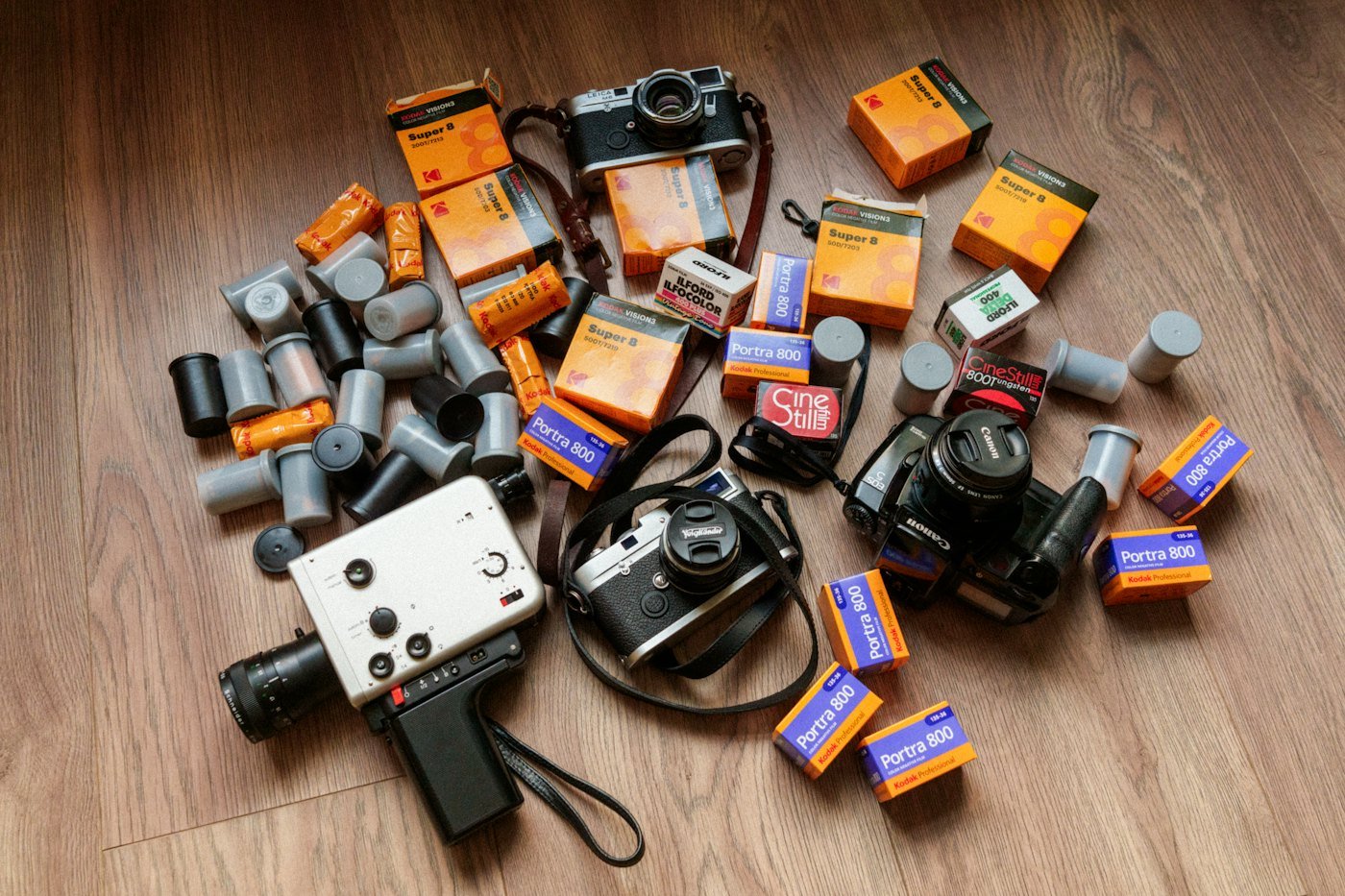
People often ask me why I still use film. It's a fair question. Digital cameras are brilliant, and I use one at every session. But film photographs look like the ones in our parents' albums, and that feeling is very hard to get any other way.
What film actually does
A digital sensor records light as numbers. Film records it chemically, on silver crystals that react to light in uneven, organic ways. That gives film a few things that are very hard to fake:
- Highlights that melt. Bright skies and sunlit hair roll off softly instead of clipping to white.
- Skin that glows. Colour film is famously kind to skin. Blemishes soften, warmth comes through.
- Grain. Not noise, grain. A texture that makes a photograph feel like a physical thing.
- Honesty. What you see is what happened. Film can't be endlessly retouched, and that is part of its charm.
35mm, 120 and Super 8, in plain English
35mm
The classic film most of our parents used. A roll has 36 frames. It's small and light, so I carry it through the whole session for the in-between moments: the laugh after the laugh, the glance, the tumble.
120 medium format
A much bigger piece of film, which means more detail and a softer, deeper look. Depending on the camera a roll holds only ten to fifteen frames, so every one is considered. I use it for portraits and for newborn sessions, when the light is still and there's time to wait.
Super 8
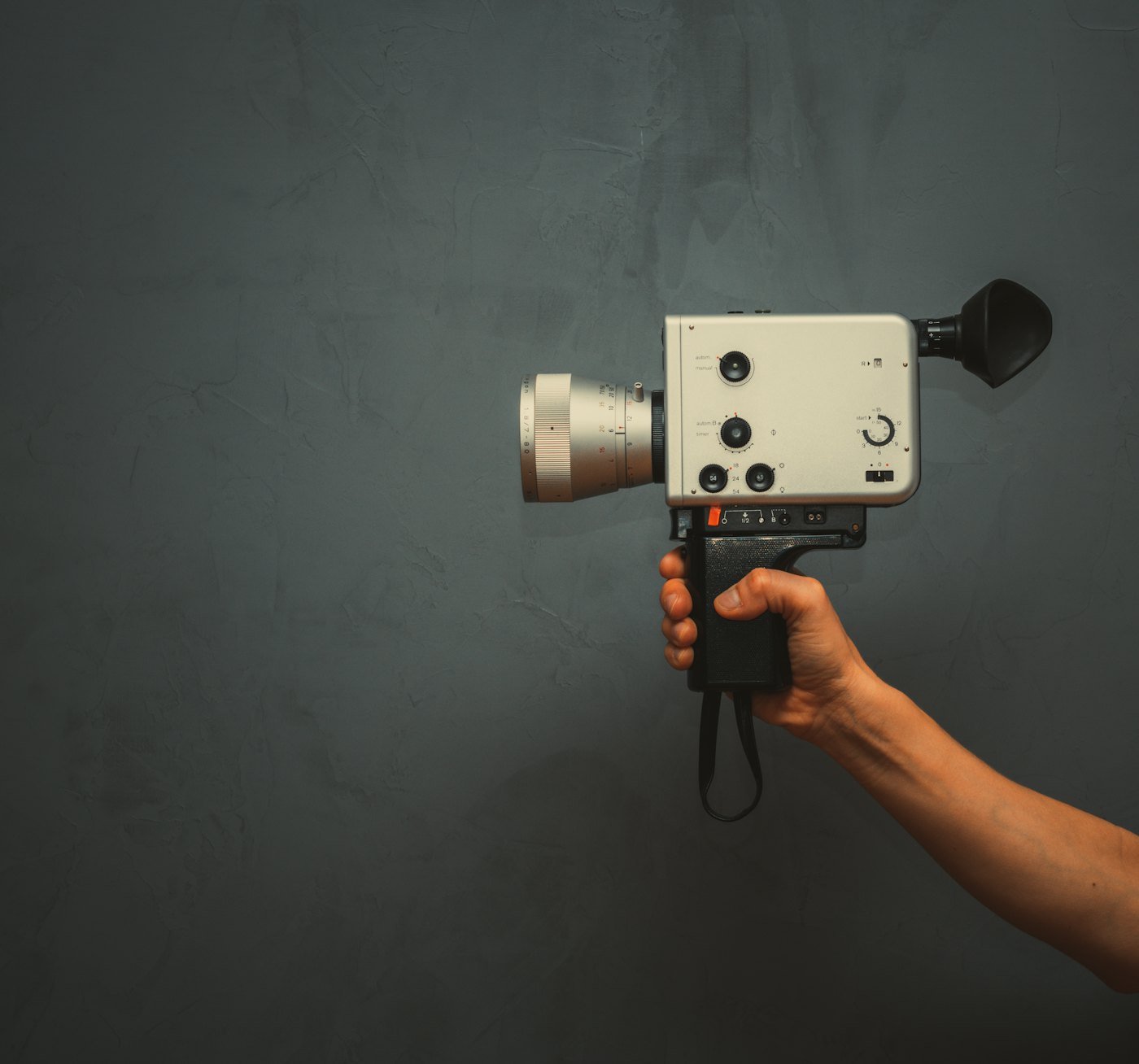
This is the one people get excited about. Super 8 is motion picture film, introduced by Kodak in 1965 and used for decades of family home movies. A cartridge holds 50 feet of film, which is about three minutes of footage. There's no sound, the picture flickers and the colours are warm and dreamy.
I shoot the cartridge during your session, send it to a specialist lab to be developed, have it scanned frame by frame, then edit it and set it to music. You end up with a short film that feels like a memory the first time you watch it.
Why it takes longer
Film has to travel. Rolls go to a professional lab to be developed and scanned, and Super 8 goes to a motion picture lab. Then I colour every scan by hand so it sits alongside your digital photos. Digital galleries usually arrive within three weeks. Film follows, and Super 8 films usually take six to eight weeks.
I know that's slow in a world of instant everything. I think the wait makes the premiere better.
Why I shoot both
Children are fast, light changes and some moments only happen once. Digital means I never miss the important frames. Film means some of those frames become heirlooms. Together they tell a fuller story than either could alone.
Every session I offer includes at least one roll of film. If you'd like Super 8 too, it's part of The Home Movie and The Long Take, or you can add a cartridge to any other session for $650.See all sessions.
In twenty years your children won't care what camera took the photo. They'll care that it looks like a memory. Film does that.